

Enterprise Applications Solutions

Make business applications simpler, connected and scalable.

Plan, implement, integrate and modernise the applications that run finance, sales, service, people, operations and supply chains—while improving adoption, control and business performance.

ERP, CRM, HCM and finance Integration and modernization Managed application operations
Applications should enable the business—not slow it down

Enterprise performance depends on connected processes and reliable applications.

ERP, CRM, HCM, finance, supply-chain and industry platforms often grow independently, creating duplicate data, manual work, inconsistent processes and poor user adoption.

Data Confiance helps organisations simplify the application landscape, integrate core processes, modernise legacy systems and create an operating model that improves reliability, visibility and business agility.

Application portfolio and process assessment ERP, CRM, HCM and finance solutions Application integration and API enablement Legacy modernization and cloud transition Workflow automation and user adoption Testing, support and managed operations
Discuss Your Application Roadmap
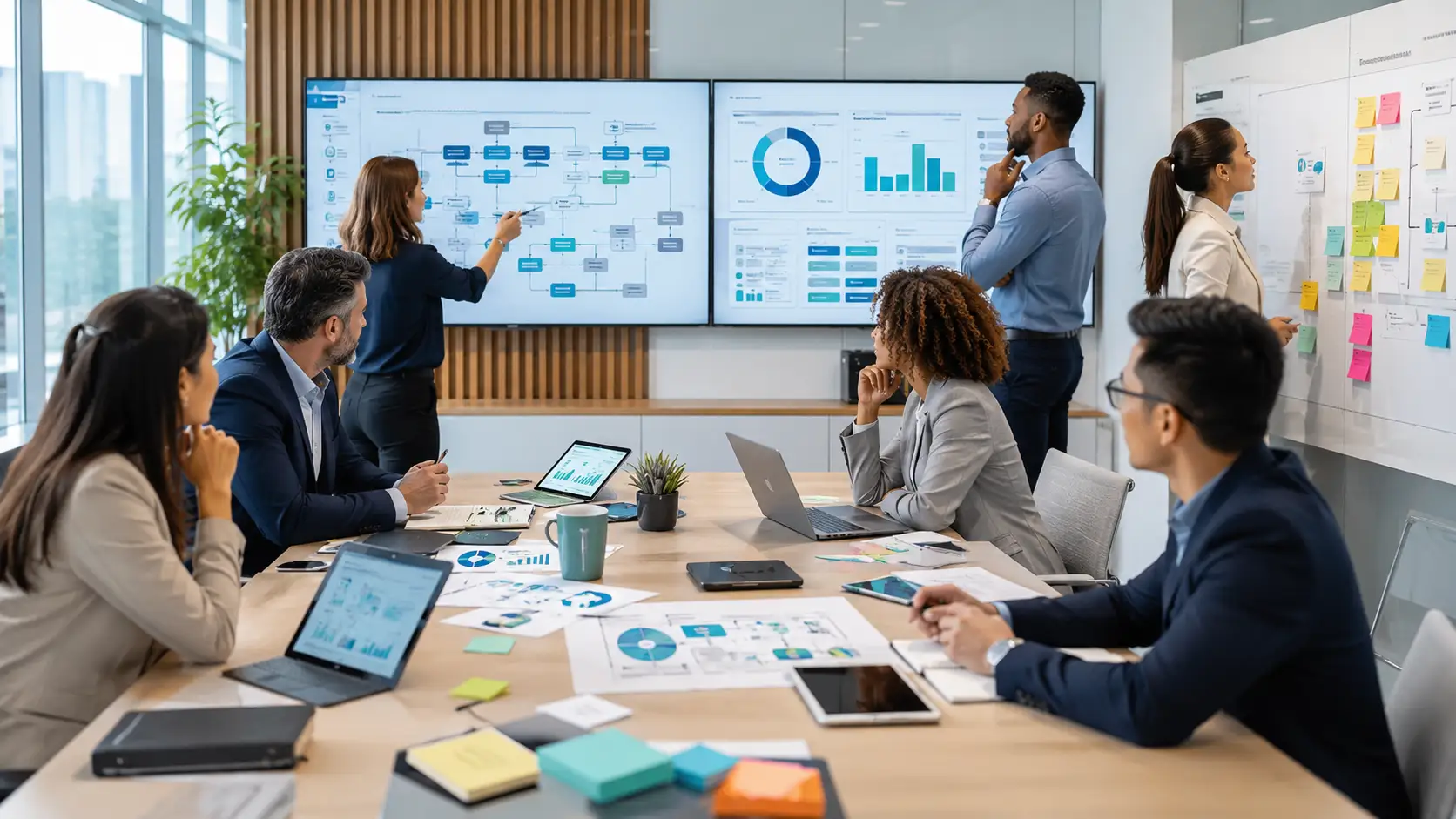
Enterprise application transformation and business process collaboration
Connect technology to the way the business operates Applications, data, integrations and user workflows are designed as one coordinated business system.
Enterprise application dashboard and business analytics
360° Coverage from strategy and implementation through integration, adoption and managed support.
Business process and enterprise application planning
Begin with business processes
Process-led application strategy

Improve how work flows before changing technology.

Replacing software without addressing fragmented processes often recreates the same problems on a new platform. We map business workflows, ownership, data, approvals and user pain points before defining the application roadmap.

Map current processes, roles and decision points. Identify duplication, manual effort and control gaps. Define future-state workflows and ownership. Match platforms and modules to measurable outcomes.
Explore the enterprise applications framework
Enterprise application integration and modernization
Connect applications without creating brittle complexity
Integration and modernization

Make data and processes move cleanly across systems.

Enterprise applications create greater value when customer, employee, finance, operations and supply-chain data flow consistently. We modernise interfaces through APIs, integration platforms, workflow automation and controlled data synchronisation.

Map system dependencies and data ownership. Replace point-to-point interfaces with reusable services. Automate approvals, notifications and exception handling. Monitor integration health and transaction failures.
See our delivery approach
One accountable partner across the application lifecycle. Integrated consulting, implementation, integration, modernization, adoption and managed support.
16+Years of enterprise technology delivery
500+Client relationships supported
6Core application capability domains
24×7Managed support options
Capabilities

Modernise the applications that run your business.

Engage Data Confiance for an end-to-end application transformation or a focused requirement across ERP, CRM, HCM, integration, modernization, automation or managed services.

Enterprise application strategy and assessment
Create a business-led application roadmap

Application portfolio, process and modernization assessment

Translate business priorities, processes, application portfolios, data and operating constraints into a phased transformation roadmap.

Application inventory and dependency mapping Business-process assessment Usage and adoption review Technical debt and lifecycle analysis Cloud and modernization suitability Prioritised transformation roadmap
Discuss This Capability
Delivery framework

From business process to dependable application operations.

Our methodology connects process design, platform selection, implementation, integration, adoption and ongoing support into one controlled programme.

Start With an Application Assessment
01 / DISCOVER

Understand processes, applications and pain points

Document workflows, users, systems, data, integrations, controls, reporting, support issues, technical debt and business priorities.

02 / DESIGN

Define future-state processes and architecture

Create the target process model, platform architecture, data model, integrations, controls, roles, security and adoption plan.

03 / IMPLEMENT

Configure, integrate and migrate with control

Manage configuration, customisation, data migration, interfaces, testing, documentation, training and cutover readiness.

04 / ADOPT

Help users work effectively in the new model

Deliver role-based training, process guidance, champions, communication, hypercare and adoption measurement.

05 / OPTIMISE

Improve performance, support and business value

Monitor incidents, usage, integrations, releases, performance, licences, enhancements, security and continuous process improvement.

Enterprise application use cases

Connect systems around how the business creates value.

We adapt platforms, processes, integrations and support to the operating model, industry, scale and transformation priority.

Finance and ERP transformation

ERP & Finance Transformation

Integrated finance, procurement, projects, planning and controls with better visibility, standardisation and reporting.

Customer relationship management transformation

CRM & Customer Experience

Connected sales, marketing, service, customer data and engagement workflows across the customer lifecycle.

Human capital management and employee applications

HCM & Employee Experience

Core HR, recruitment, onboarding, payroll, performance, learning and employee self-service applications.

Supply chain and procurement applications

Supply Chain & Procurement

Planning, sourcing, purchasing, inventory, logistics and supplier collaboration through connected processes and data.

Legacy application modernization

Legacy Application Modernization

Replatforming, API enablement, cloud transition, user-interface improvement and controlled retirement of technical debt.

Application managed services and support

Managed Application Services

Functional support, incident resolution, release management, integration monitoring, enhancements and continuous optimisation.

Customer stories

See how connected applications improve business performance.

The examples below illustrate the challenge, scope and outcomes a detailed Data Confiance case study can present. Final published stories should use approved customer information and verified results.

CRM customer service transformation
Representative engagement · CRM

Creating a connected sales and service view of the customer.

Customer-data consolidation, pipeline workflows, service management, integrations, dashboards and adoption support.

Explore this use case
Legacy enterprise application modernization
Representative engagement · Modernization

Modernising a legacy application without disrupting operations.

Dependency assessment, API enablement, phased migration, data validation, user transition and controlled retirement.

Explore this use case
Resources & insights

Make better enterprise application decisions.

Use practical assessments, checklists and planning guides to evaluate portfolios, processes, integrations, modernization risk, adoption and operating maturity.

Enterprise application roadmap guide
Readiness guide

Is your application portfolio ready for transformation?

Assess business fit, lifecycle, usage, technical debt, integration, cloud suitability, support and business value.

Request the guide
Application integration checklist
Assessment checklist

Enterprise application integration checklist.

Review interfaces, ownership, APIs, failures, monitoring, security, data consistency, dependencies and supportability.

Request the checklist
ERP implementation and adoption playbook
Transformation playbook

Plan a controlled ERP or enterprise application rollout.

Understand process design, data, integrations, testing, training, cutover, hypercare and adoption measurement.

Request the playbook
Frequently asked questions

Questions before transforming enterprise applications.

Clear answers to common questions around ERP, CRM, HCM, modernization, integration, migration, testing, adoption and managed services.

Ask an Applications Specialist
It can include business processes, application inventory, users, integrations, data, usage, support issues, technical debt, security, licensing, cloud suitability, adoption and a prioritised transformation roadmap.
The decision depends on business fit, lifecycle support, technical debt, integration, user experience, cost, risk, customisation and the value of moving to a new operating model.
Risk is reduced through clear process ownership, scope control, fit-gap analysis, master-data preparation, integration design, testing, user involvement, training, cutover planning and executive governance.
Point-to-point interfaces can be replaced with APIs, reusable services, integration platforms, event-driven patterns and central monitoring according to process and transaction needs.
Data migration includes profiling, cleansing, ownership, mapping, transformation, reconciliation, trial loads, validation, cutover controls and business sign-off.
Adoption improves through role-based design, user involvement, process clarity, practical training, champions, communication, accessible support, usage measurement and rapid issue resolution.
Yes. Depending on architecture, applications may be rehosted, replatformed, containerised, database-modernised or API-enabled while retaining core functionality.
Managed services can include functional and technical support, incidents, integrations, releases, testing, enhancements, performance, security, licence optimisation, reporting and continuous improvement.