
Compute & Storage Solutions

Infrastructure built to process, protect and scale.

Modernise servers, storage, virtualisation and private cloud through platforms designed around application performance, resilience, security, efficiency and future business demand.

Enterprise compute platforms Modern storage architectures Virtualisation and HCI
The digital business foundation

Every application depends on the right compute and storage architecture.

Performance issues are rarely solved by adding isolated hardware. Business workloads need coordinated decisions across processing, memory, storage tiers, virtualisation, resilience, data movement, security and operational management.

Data Confiance brings these layers together into one infrastructure strategy—helping organisations consolidate legacy environments, improve utilisation, modernise platforms and prepare for cloud, analytics, AI and growing data volumes.

Infrastructure discovery and assessment Workload and capacity analysis Compute platform modernisation Storage architecture and tiering Virtualisation and consolidation Lifecycle and managed support
Discuss Your Infrastructure
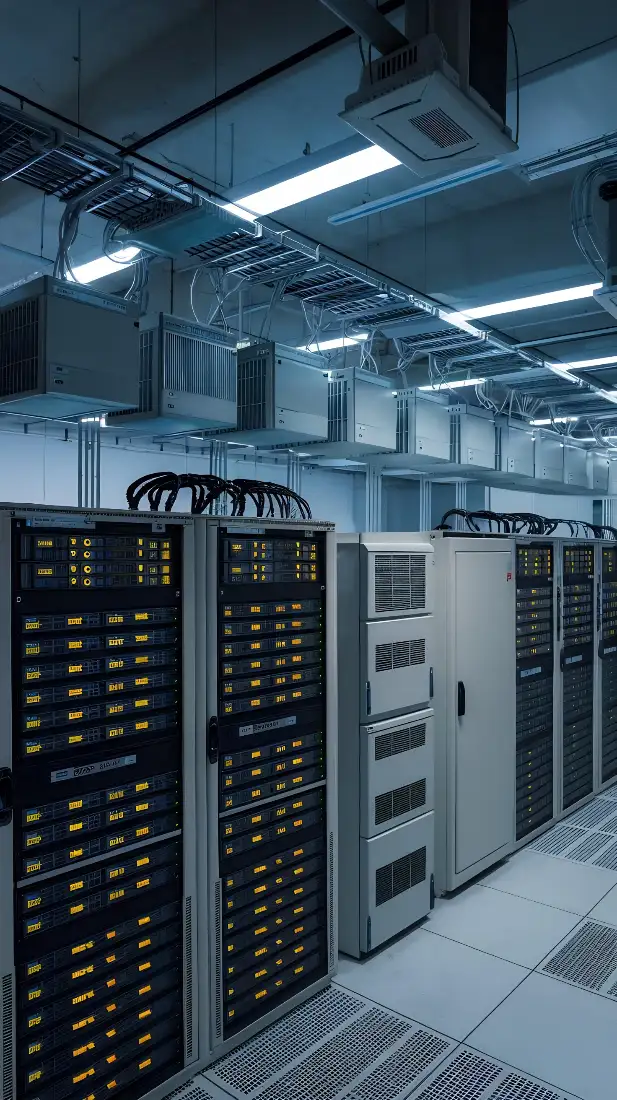
Enterprise compute and storage infrastructure
Designed around workload behaviour Capacity, performance, resilience and cost are aligned to the applications and data that matter most.
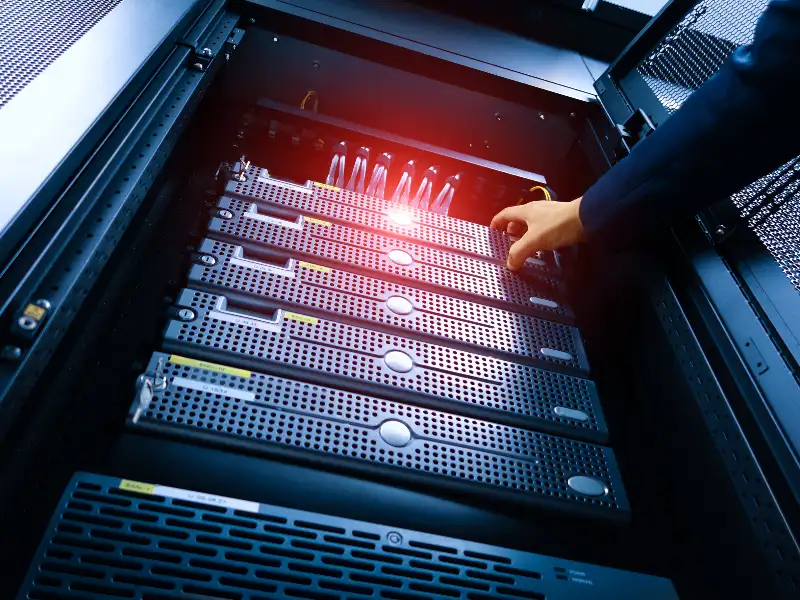
Enterprise servers and storage systems
360° Coverage from assessment and design through migration, optimisation and managed operations.
Enterprise compute architecture
Performance begins with workload understanding
Right-size the platform

Build compute environments around applications—not assumptions.

Business-critical applications, databases, virtual machines, analytics platforms and AI workloads behave differently. We assess usage patterns, dependencies, growth, availability and latency before defining the right server, memory, acceleration and virtualisation architecture.

Analyse utilisation, peak demand and workload dependencies. Match compute density to performance and resilience needs. Plan virtualisation, clustering and high availability together. Create headroom for growth without chronic overprovisioning.
Explore the capability framework
Enterprise data storage and modernisation
Modernise data without disrupting access
Storage transformation

Place every data set on the right storage tier.

Growing data volumes create cost and operational pressure when block, file, object, archive and backup requirements are treated the same. We design tiered storage environments around performance, protection, retention, access and lifecycle economics.

Assess capacity, IOPS, throughput, latency and data growth. Define block, file, object and archival storage roles. Plan migration with coexistence and rollback procedures. Integrate replication, snapshots and data protection policies.
See our delivery approach
One accountable partner across the infrastructure lifecycle. Integrated consulting, platform design, migration, optimisation and operational support.
16+Years of enterprise technology delivery
500+Client relationships supported
6Core compute and storage domains
24×7Managed support options
Capabilities

Create a modern platform for applications and data.

Engage Data Confiance for complete infrastructure transformation or a focused requirement across servers, storage, virtualisation, HCI, AI-ready computing or managed operations.

Compute and storage assessment
Plan the right platform

Infrastructure assessment and architecture

Translate application demand, data growth, resilience, security and operational requirements into a practical compute and storage roadmap.

Current-state discovery Workload profiling Capacity and performance analysis Target architecture High-level and low-level design Migration roadmap
Discuss This Capability
Delivery framework

From workload discovery to dependable infrastructure.

Our structured methodology connects business priorities with sizing, architecture, migration control, performance validation, documentation and ongoing platform support.

Start With an Assessment
01 / DISCOVER

Understand applications, workloads and data

Document infrastructure, utilisation, performance, dependencies, growth, service levels, recovery expectations, risks and operational constraints.

02 / ARCHITECT

Design the target compute and storage platform

Define server, memory, acceleration, virtualisation, clustering, storage tiers, connectivity, resilience, security and management requirements.

03 / IMPLEMENT

Deploy, configure and integrate every layer

Coordinate platform installation, firmware, virtualisation, storage provisioning, clustering, network integration, monitoring, documentation and testing.

04 / MIGRATE

Move workloads and data through controlled change

Use pilot migrations, coexistence, replication, validation, planned cutovers and rollback procedures to minimise service disruption.

05 / OPTIMISE

Improve utilisation, performance and lifecycle control

Track health, capacity, availability, configuration, incidents, patches, warranties and refresh requirements through managed support.

Alliance-enabled solutions

Combine the right technologies across the platform.

Our vendor-neutral approach integrates compute, storage, virtualisation, HCI, acceleration and management technologies around the workload—not a predetermined hardware stack.

Compute ecosystem

Enterprise servers, dense computing and workload platforms

Build reliable compute foundations for business applications, databases, virtual machines, analytics and performance-intensive workloads.

Enterprise compute platform
Vendor-neutral integration Technology selection remains aligned to workload fit, performance, resilience, manageability, compatibility, support and total lifecycle cost.
Industry and workload solutions

Different workloads demand different infrastructure priorities.

We adapt compute density, storage architecture, resilience, security, migration and support to application criticality, data behaviour, compliance and growth.

Enterprise applications and databases

Enterprise Applications & Databases

Reliable compute, memory and storage performance for ERP, CRM, databases and transaction-intensive business platforms.

Virtualisation and consolidation

Virtualisation & Consolidation

Reduce hardware sprawl, improve utilisation and simplify management through clustered virtual infrastructure and shared storage.

Private cloud and hybrid infrastructure

Private & Hybrid Cloud

Standardised, automated infrastructure for private cloud, cloud-adjacent workloads and controlled hybrid operating models.

Analytics and artificial intelligence infrastructure

Analytics, AI & GPU Workloads

High-density compute, accelerated processing, fast storage and scalable data pipelines for analytics and AI initiatives.

Storage modernisation and data growth

Storage Modernisation

Tiered block, file and object storage designed for capacity growth, performance, data mobility and lifecycle efficiency.

Edge compute and branch infrastructure

Edge & Distributed Infrastructure

Compact, resilient compute and storage platforms for plants, branches, remote sites and latency-sensitive applications.

Customer stories

See how platform modernisation improves business performance.

The examples below illustrate the challenge, scope and outcomes a detailed Data Confiance case study can present. Final published stories should use approved customer information and verified results.

Storage modernisation
Representative engagement · Data Growth

Modernising storage for growing application and unstructured data.

Tiered block, file and object storage with migration planning, replication, capacity visibility and lifecycle management.

Explore this use case
AI and analytics infrastructure
Representative engagement · Analytics

Building an accelerated platform for analytics and AI workloads.

GPU-ready compute, high-throughput storage, data connectivity, capacity planning and monitoring aligned to model development needs.

Explore this use case
Resources & insights

Make better infrastructure decisions.

Use practical assessments, checklists and planning guides to evaluate utilisation, capacity, performance, resilience, migration complexity and lifecycle risk.

Compute infrastructure readiness
Readiness guide

Is your compute environment ready for the next workload?

Assess utilisation, memory pressure, virtualisation, resilience, support status, growth and platform lifecycle risk.

Request the guide
Storage assessment checklist
Assessment checklist

Enterprise storage performance and capacity checklist.

Review IOPS, throughput, latency, growth, snapshots, replication, tiering, support status and operational visibility.

Request the checklist
Infrastructure migration planning
Migration playbook

Plan a controlled server and storage modernisation.

Understand workload discovery, compatibility, replication, pilot migration, coexistence, cutover, rollback and validation.

Request the playbook
Frequently asked questions

Questions before modernising compute and storage.

Clear answers to the architecture, sizing, virtualisation, HCI, storage, migration and managed-support questions organisations commonly raise.

Ask an Infrastructure Specialist
It may include discovery, workload profiling, capacity analysis, architecture, servers, storage, virtualisation, HCI, clustering, migration, monitoring, documentation, training and ongoing support. The final scope is matched to application and business requirements.
The decision considers performance, support status, utilisation, application compatibility, resilience, data gravity, operating cost, cloud suitability, security, skills and business timing.
HCI is useful where organisations want simplified scaling, standardised infrastructure, integrated management and rapid deployment. It is evaluated against workload behaviour, storage needs, resilience, licensing and growth.
Sizing considers usable capacity, data reduction, IOPS, throughput, latency, workload mix, snapshots, replication, retention, growth, failure overhead and future expansion—not raw capacity alone.
Yes. Migration planning can include compatibility analysis, replication, pilot workloads, coexistence, maintenance windows, validation, rollback procedures and post-migration optimisation.
We assess model type, data volume, accelerator demand, memory, network throughput, storage performance, power, cooling, scheduling, security and the expected growth path before defining the platform.
Managed support can include health monitoring, capacity reporting, incident response, configuration backup, patch and firmware planning, preventive maintenance, warranty tracking, service desk and resident engineers.
Technology is evaluated against workload fit, performance, resilience, compatibility, manageability, automation, support model, existing skills, vendor roadmap, lifecycle risk and total cost of ownership.