
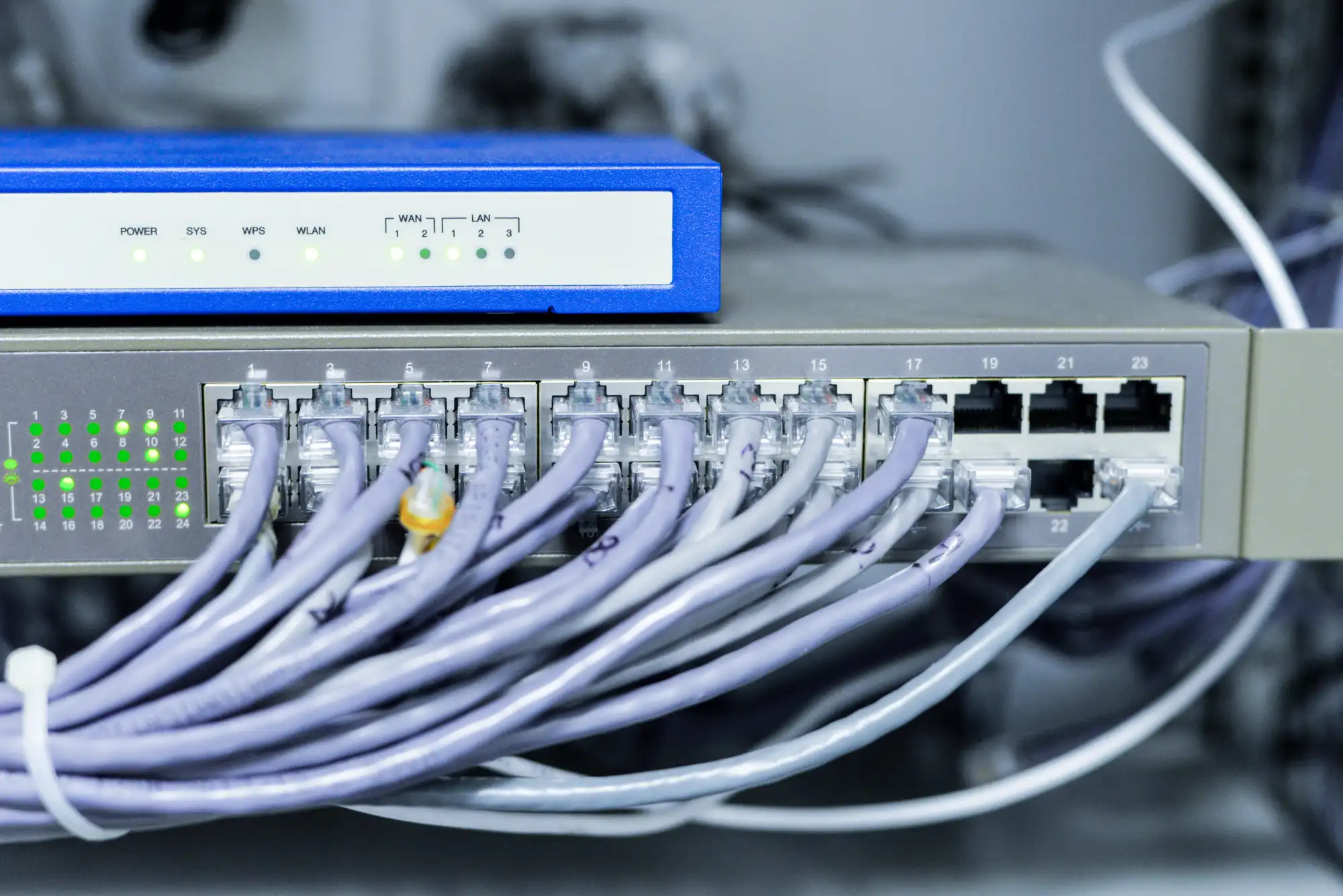
Every Digital Experience Eventually Reaches the Physical Network
Cloud computing may be virtual. Applications may be SaaS-based. Collaboration may happen over video. AI workloads may run on GPUs.
But users, access points, servers, cameras, IoT devices and data centre equipment still depend on a physical connectivity layer.
That makes structured cabling one of the longest-lived components of an enterprise technology environment.
Data Confiance's relationship with infrastructure technology ecosystems such as R&M allows it to address this foundation through an engineering-led approach.
Why Structured Cabling Quality Matters
Poorly designed cabling environments create problems that may not appear immediately.
Network instability, difficult troubleshooting, unmanaged patching, limited upgrade capability, inconsistent labelling and unplanned capacity constraints can increase operational cost over the life of the facility.
The opposite is also true.
A properly planned structured cabling environment makes the infrastructure easier to operate, expand, troubleshoot and document.
Copper, Fibre and the Changing Enterprise
Modern enterprises are placing greater demands on connectivity.
High-speed wireless networks require strong wired backhaul. Data centres require high-density fibre connectivity. Surveillance systems and access control add endpoints. Collaboration systems depend on stable network performance. AI and analytics increase east-west and north-south traffic.
The cabling architecture therefore needs to be designed around applications rather than merely around desks.
Why R&M Technology Needs an Integration Framework
The best component cannot compensate for poor implementation.
Data Confiance's role includes translating business and technical requirements into topology, pathway planning, media selection, installation standards, testing and documentation.
This is particularly useful for corporate offices, manufacturing facilities, data centres, campuses and multi-location projects.
Data Confiance's own website highlights plant LAN upgrades, industrial optical fibre, OTDR testing and infrastructure deployments as part of its field capabilities. Data Confiance
Testing Should Never Be an Afterthought
A network should not be accepted merely because connectivity appears to work.
Professional infrastructure projects require defined testing, evidence, documentation and handover.
Testing helps demonstrate that the installed system performs according to the intended design and provides an important baseline for future troubleshooting.
Data Confiance incorporates testing and handover within its seven-stage delivery journey rather than treating them as optional closing activities. Data Confiance
Build Once. Operate for Years.
Structured cabling often remains in a facility longer than several generations of active IT equipment.
Switches may change. Applications will change. End-user devices will change.
The physical infrastructure therefore needs to anticipate tomorrow's environment.
For an enterprise making a new infrastructure investment, the question should not only be:
“What do we need today?”
It should also be:
“What will this environment need to support five or ten years from now?”
For structured cabling, fibre infrastructure, network modernisation or data centre connectivity requirements, speak with Data Confiance.
Data Confiance — Technology built on trust.